TSIS-2
Electron, Rocket Lab
Unknown Pad, Rocket Lab Launch Complex 1, Mahia Peninsula, New Zealand
Launch time
No earlier than
NET Q1 2027
Current date is a placeholder or rough estimation based on unreliable or interpreted sources.
How sure is this date?
The source gives quarter 1 precision. Launch plans can change.
Source updated
UpdatedSlip history
No changes since we started tracking on .
- LL2 update
Launch moved to flying on Electron, NET early 2027.
Read the source update - LL2 update
NET 2027.
Read the source update - LL2 update
NET October 2025.
Read the source update - LL2 update
NET May 2025.
Read the source update - LL2 update
Adding launch NET August 2024
Read the source update
Mission
TSIS-2 on Electron from Unknown Pad. Launch time, status and recorded date changes from Launch Library 2.
The Total and Spectral Solar Irradiance Sensor 2 (TSIS-2) is a satellite designed by NASA to measure the Sun's energy input to Earth. TSIS-2 comprises two instruments, the Total Irradiance Monitor (TIM), and the spectral Irradiance Monitor (SIM). TIM measures total brightness and SIM measures spectral irradiance over a wavelength range that includes 96% of the energy in the solar spectrum. Both instruments are similar to those used for the TSIS-1 mission onboard the International Space Station.
- Mission type
- Astrophysics
- Orbit
- Sun-Synchronous Orbit
Rocket file imagery
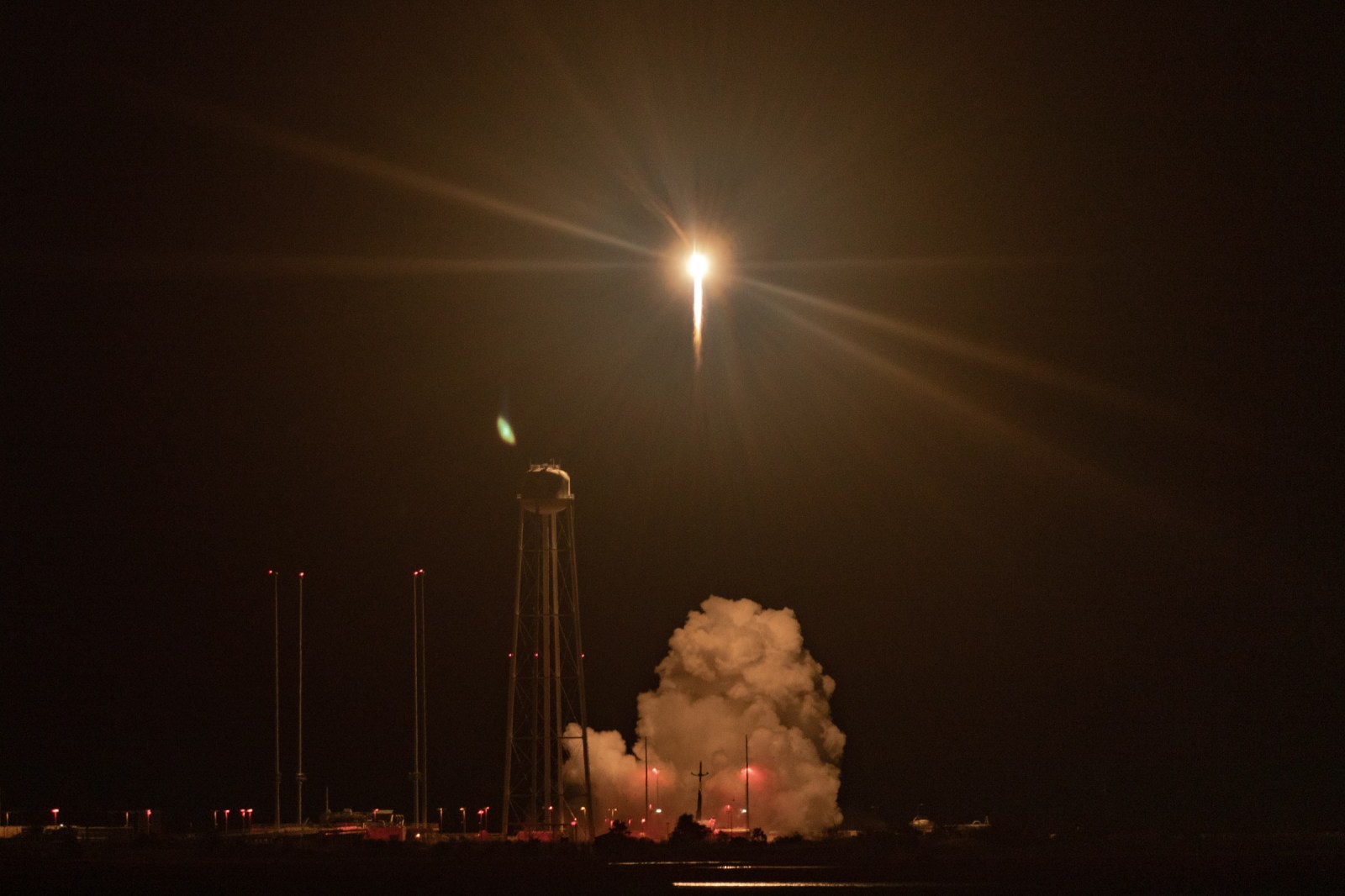
File imagery: Virginia is for Launch Lovers, 24 January 2023. Electron lifting off from Rocket Lab Launch Complex 2 at Wallops.
Credit: NASA/Danielle Johnson · Public domain (NASA) · SourceLaunch timeline
No timeline has been provided by the source.
Launch pad
Unknown Pad
Rocket Lab Launch Complex 1, Mahia Peninsula, New Zealand (NZ)
Coordinates: -39.260881, 177.865826