BlueBird 8-10 (Block 2 #3-5)
Falcon 9 Block 5, SpaceX
Space Launch Complex 40, Cape Canaveral SFS, FL, USA
Launch time
Window opens
Wed 17 Jun, 08:39 CEST
06:39 UTC
The rocket put its payload into the planned orbit.
- Window closes
How sure is this date?
The source gives minute precision. Launch plans can change.
Launch probability 90%
Weather concerns: Cumulus Cloud Rule, Anvil Cloud Rules
Source updated
UpdatedSlip history
No changes since we started tracking on .
- LL2 update
Launch success with all satellites in contact.
Read the source update - LL2 update
All 3 satellites have been separated.
Read the source update - LL2 update
Liftoff!
Read the source update - LL2 update
Unofficial Re-stream by SPACE AFFAIRS has started
Read the source update - LL2 update
Updated launch weather, 90% GO.
Read the source update - LL2 update
GO for launch.
Read the source update - LL2 update
NET mid-June.
Read the source update - LL2 update
Added launch.
Read the source update
Mission
BlueBird 8-10 (Block 2 #3-5) on Falcon 9 Block 5 from Space Launch Complex 40. Launch time, status and recorded date changes from Launch Library 2.
AST SpaceMobile’s Block 2 BlueBird satellites are designed to deliver up to 10 times the bandwidth capacity of the BlueBird Block 1 satellites, required to achieve 24/7 continuous cellular broadband service coverage in the United States, with beams designed to support a capacity of up to 40 MHz, enabling peak data transmission speeds up to 120 Mbps, supporting voice, full data and video applications. The Block 2 BlueBirds, featuring as large as 2400 square foot communications arrays, will be the largest satellites ever commercially deployed in Low Earth orbit once launched. This launch will feature 3 satellites.
- Mission type
- Communications
- Orbit
- Low Earth Orbit
Rocket file imagery
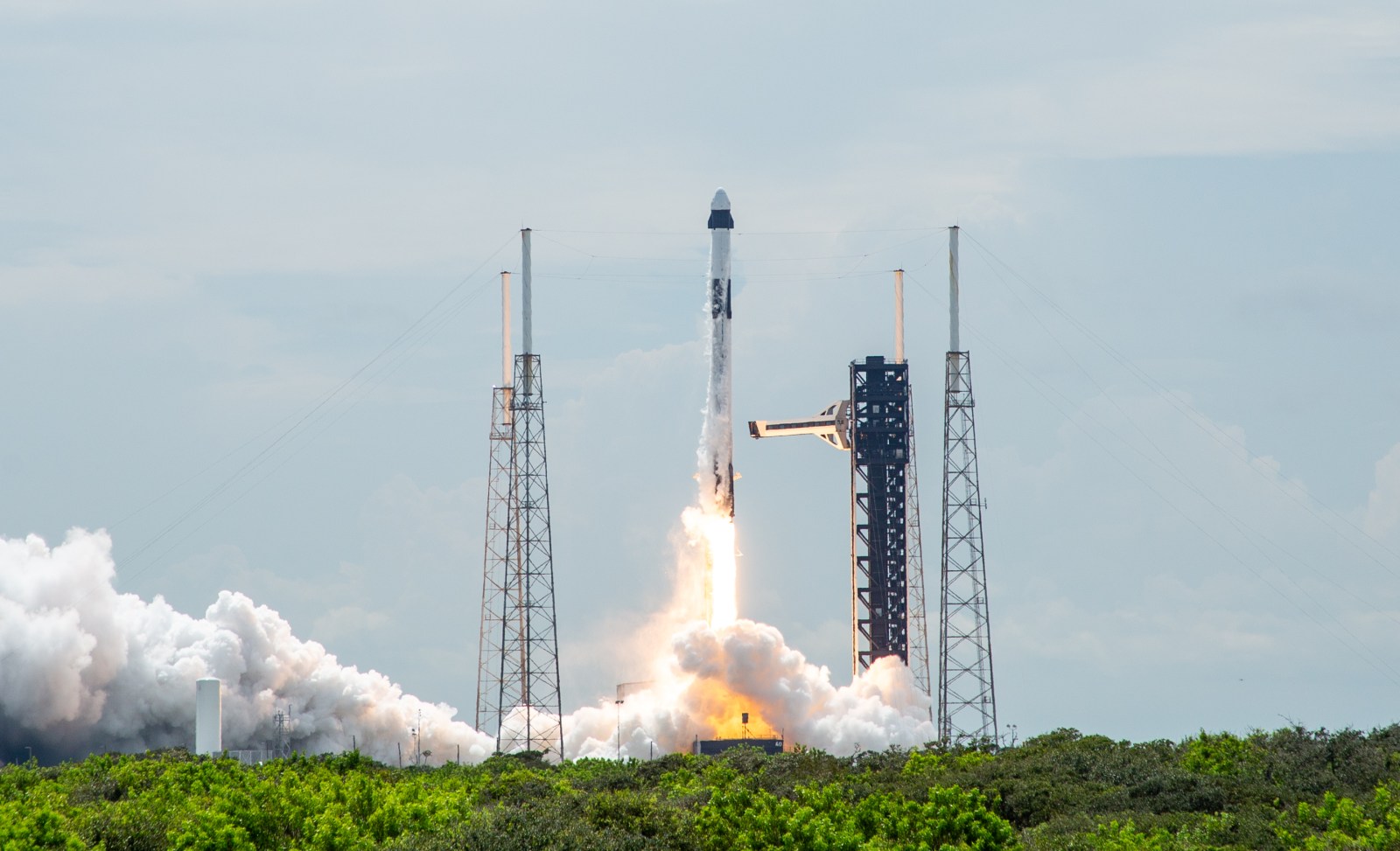
File imagery: Crew-9, 28 September 2024. Falcon 9 lifting off from Space Launch Complex 40.
Credit: NASA/Keegan Barber · Public domain (NASA) · SourceLaunch timeline
Times are relative to liftoff. Clock times are not shown while T-0 is unconfirmed or on hold.
- T-38 min
GO for Prop Load
Launch director verifies go for propellant load
- T-35 min
Stage 1 LOX Load
Start of liquid oxygen loading in the first stage
- T-35 min
Prop Load
Start of propelland loading
- T-16 min
Stage 2 LOX Load
Start of liquid oxygen loading in the second stage
- T-7 min
Engine Chill
Start of engine chilling
- T-1 min
Startup
The onboard computer takes control over the countdown and runs last checks
- T-1 min
Tank Press
Fuel tanks are pressurized to flight levels
- T-45 s
GO for Launch
Launch director verifies go for launch
- T-3 s
Ignition
Start of the engine ignition sequence
- T-0
Liftoff
First upwards movement of the rocket
- T+1 min 13 s
Max-Q
Maximum dynamic pressure
- T+2 min 27 s
MECO
Cut-off of the main engine
- T+2 min 31 s
Stage 2 Separation
Separation of the second stage from the first
- T+2 min 39 s
SES-1
First start of the second engine
- T+3 min 22 s
Fairing Separation
Separation of the payload fairing
- T+6 min 16 s
Entry Burn Startup
Start of the atmospheric entry burn
- T+6 min 39 s
Entry Burn Shutdown
End of the atmospheric entry burn
- T+8 min 2 s
Stage 1 Landing Burn
Start of the first stage landing burn
- T+8 min 30 s
SECO-1
First cut-off of the second engine
- T+8 min 32 s
Stage 1 Landing
Landing of the first stage
- T+46 min
SES-2
Second start of the second engine
- T+46 min 6 s
SECO-2
Second cut-off of the second engine
- T+54 min 27 s
Payload Separation
Final deployment of the payload from the rocket
- T+59 min 47 s
Payload Separation
Final deployment of the payload from the rocket
- T+1 h 5 min 7 s
Payload Separation
Final deployment of the payload from the rocket
Launch pad
Space Launch Complex 40
Cape Canaveral SFS, FL, USA (US)
Coordinates: 28.56194122, -80.57735736
View launch pad on a map