PLATiNO-2
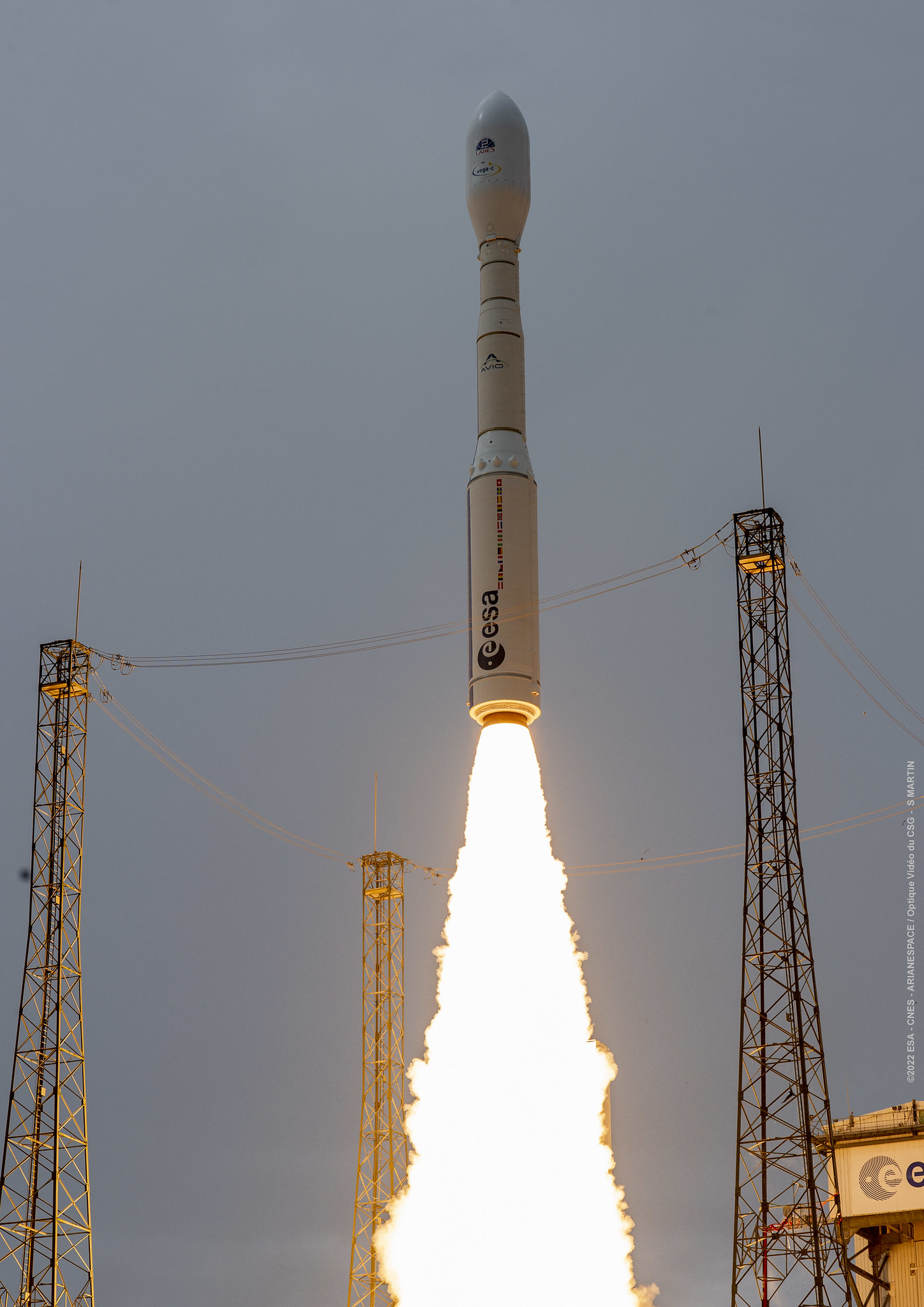
Vega-C, Avio S.p.A
Ariane Launch Area 1 (ELV), Guiana Space Centre, French Guiana
Launch time
No earlier than
NET November 2027
Current date is a placeholder or rough estimation based on unreliable or interpreted sources.
How sure is this date?
The source gives month precision. Launch plans can change.
Source updated
UpdatedSlip history
No changes since we started tracking on .
- LL2 update
NET November 2027
Read the source update - LL2 update
NET June 2027
Read the source update - LL2 update
NET June 2026
Read the source update - LL2 update
NET February 2026
Read the source update - LL2 update
Adding the launch
Read the source update
Mission
PLATiNO-2 on Vega-C from Ariane Launch Area 1 (ELV). Launch time, status and recorded date changes from Launch Library 2.
PLATiNO-2 is an Earth observation satellite developed for the Italian Space Agency (ASI), making use of the PLATiNO minisatellite platform - a versatile and modular small satellite system - to support a variety of space missions for Earth observation, telecommunications, and scientific research. The platform offers a scalable and cost-effective solution for payload integration in support of diverse mission requirements and orbital configurations, with a focus on high performance, flexibility, and reliability, for both governmental and commercial applications. The PLATiNO-2 mission carries a Thermal Infrared (TIR) payload, validating PLATiNO multi-applicability feature. Developed by Leonardo and SITAEL, PLATiNO-2 TIR will acquire images that will be used to provide valuable services for territories control and protection such as monitoring waters, glaciers, pollutants, state of crops and vegetation, energy consumption in urban areas. PLATiNO-2 is also equipped with the magnetically shielded HT 100, an improved version of SITAEL electric thruster, making PLATiNO-2 one of the first missions in the world to observe the Earth in the Thermal Infrared from a very low orbit – less than 400 km – and thus significantly improving the resolution of the acquired images. The satellite also carries NASA’s Multi-Angle Imager for Aerosols (MAIA) instrument, which will study how different types of particulate matter air pollution affect our health.
- Mission type
- Earth Science
- Orbit
- Sun-Synchronous Orbit
Launch timeline
No timeline has been provided by the source.
Launch pad
Ariane Launch Area 1 (ELV)
Guiana Space Centre, French Guiana (GF)
Coordinates: 5.236, -52.775
View launch pad on a map