Sirius SXM-10
Falcon 9 Block 5, SpaceX
Space Launch Complex 40, Cape Canaveral SFS, FL, USA
Launch time
T-0
Sat 7 Jun, 06:54 CEST
04:54 UTC
The rocket put its payload into the planned orbit.
- Window opens
- Window closes
How sure is this date?
The source gives minute precision. Launch plans can change.
Launch probability 85%
Weather concerns: Cumulus Cloud Rule, Anvil Cloud Rules
Launch record updated by LL2
Feed checkedMission
Sirius SXM-10 on Falcon 9 Block 5. Sat 7 Jun 2025, 04:54 UTC. Reported outcome: Success. Launch site: Space Launch Complex 40. Source: Launch Library 2.
SXM-10 is the 11th high-powered, digital, audio radio satellite built by Maxar (SSL) for SiriusXM. The SXM-10 satellite will be based on Maxar’s proven 1300-class platform and built at the company’s manufacturing facility in Palo Alto, California. SXM-10 has a large, mesh, unfurlable reflector almost 10 meters in diameter that allows SiriusXM programming to reach its radios, including those in moving vehicles.
- Mission type
- Communications
- Orbit
- Geostationary Transfer Orbit
Rocket file imagery
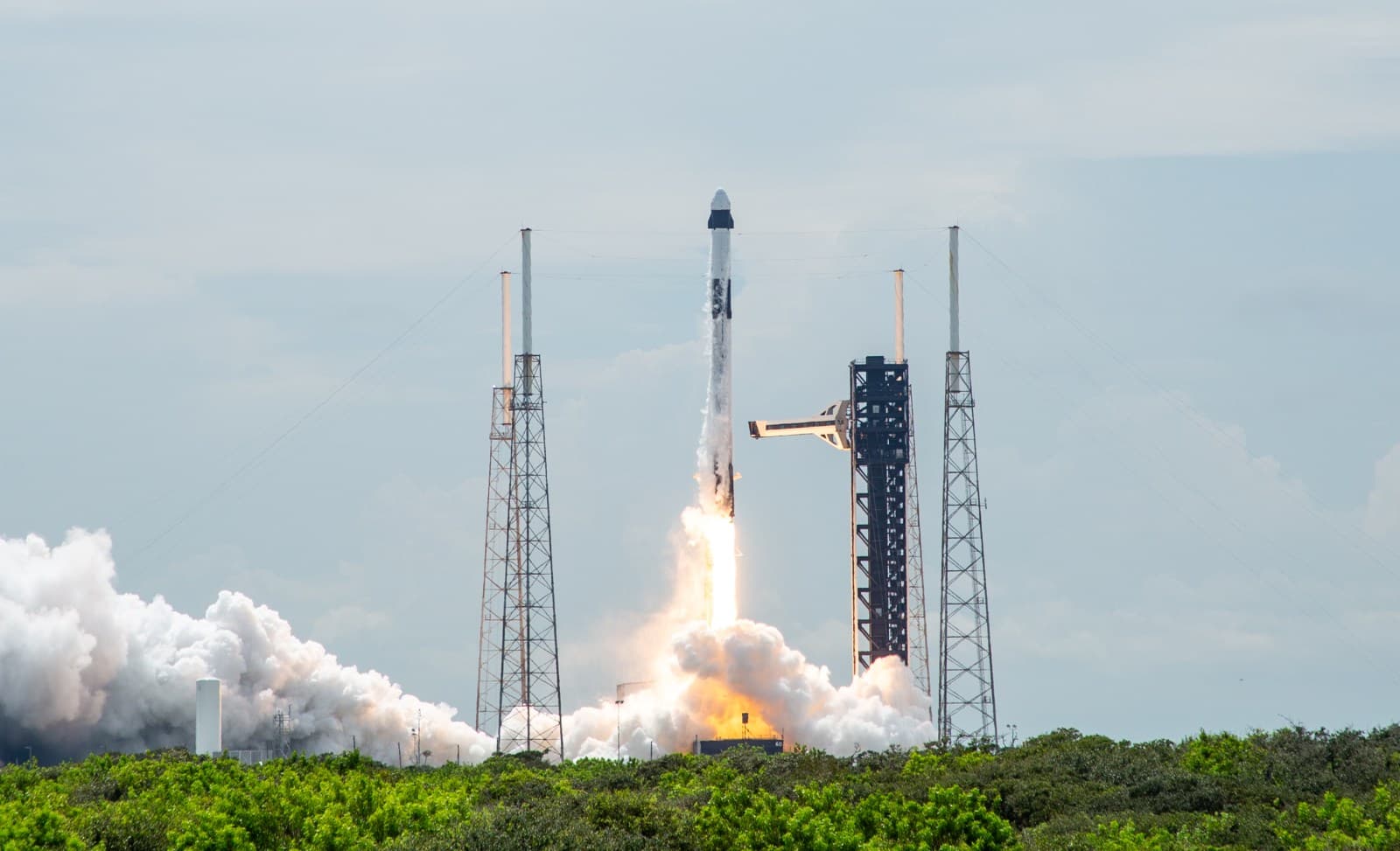
File imagery: Crew-9, 28 September 2024. Falcon 9 lifting off from Space Launch Complex 40.
Credit: NASA/Keegan Barber · Public domain (NASA) · SourceMission patches
- Sirius SXM-10
Patch artwork is not shown because its image licence is unconfirmed.
Launch timeline
Times are relative to liftoff.
- T-38 min
GO for Prop Load
Launch director verifies go for propellant load
- T-35 min
Stage 1 LOX Load
Start of liquid oxygen loading in the first stage
- T-35 min
Prop Load
Start of propelland loading
- T-16 min
Stage 2 LOX Load
Start of liquid oxygen loading in the second stage
- T-7 min
Engine Chill
Start of engine chilling
- T-1 min
Tank Press
Fuel tanks are pressurized to flight levels
- T-1 min
Startup
The onboard computer takes control over the countdown and runs last checks
- T-45 s
GO for Launch
Launch director verifies go for launch
- T-3 s
Ignition
Start of the engine ignition sequence
- T-0
Liftoff
First upwards movement of the rocket
- T+1 min 15 s
Max-Q
Maximum dynamic pressure
- T+2 min 28 s
MECO
Cut-off of the main engine
- T+2 min 31 s
Stage 2 Separation
Separation of the second stage from the first
- T+2 min 39 s
SES-1
First start of the second engine
- T+3 min 26 s
Fairing Separation
Separation of the payload fairing
- T+6 min 10 s
Entry Burn Startup
Start of the atmospheric entry burn
- T+6 min 36 s
Entry Burn Shutdown
End of the atmospheric entry burn
- T+7 min 57 s
Stage 1 Landing Burn
Start of the first stage landing burn
- T+8 min 4 s
SECO-1
First cut-off of the second engine
- T+8 min 21 s
Stage 1 Landing
Landing of the first stage
- T+25 min 53 s
SES-2
Second start of the second engine
- T+27 min
SECO-2
Second cut-off of the second engine
- T+33 min 11 s
Payload Separation
Final deployment of the payload from the rocket
Slip history
Changes recorded by Space Right Now
No changes since we started tracking on .
Source updates from Launch Library 2 (15)
Announcements supplied by LL2 may predate our tracking. They are separate from changes observed by Space Right Now.
- LL2 update
Launch success.
Read the source update - LL2 update
Payload deployed
Read the source update - LL2 update
Liftoff
Read the source update - LL2 update
New T-0.
Read the source update - LL2 update
New T-0.
Read the source update - LL2 update
New T-0.
Read the source update - LL2 update
New T-0.
Read the source update - LL2 update
New T-0.
Read the source update - LL2 update
GO for launch.
Read the source update - LL2 update
Weather 85% Go.
Read the source update - LL2 update
Adjusted launch window per marine navigation warnings.
Read the source update - LL2 update
Added approximate launch time.
Read the source update - LL2 update
Updated Pad
Read the source update - LL2 update
NET June 6.
Read the source update - LL2 update
Added launch.
Read the source update
Launch pad
Space Launch Complex 40
Cape Canaveral SFS, FL, USA (US)
Coordinates: 28.56194122, -80.57735736
View launch pad on a map